History
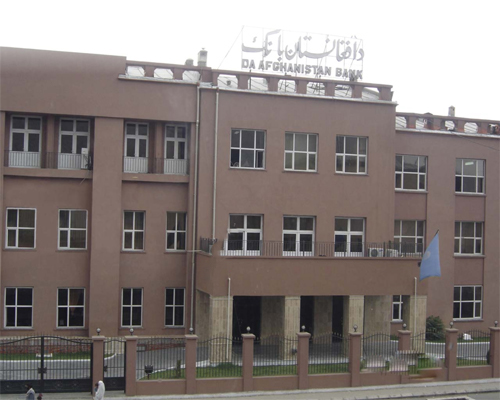
Da Afghanistan Bank (DAB) was established in the capital, Kabul, with an initial capital of AFN 120,000,000, pursuant to Cabinet Approval No. 152, dated 23/04/1939, National Assembly Approval No. 11, dated 10/09/1939, House of Elders (Meshrano Jirga) Approval, dated 3/09/1939, and House of Lords (Majlis Ayan) Approval No. 5280, dated 6/02/1940. The Bank was authorized to establish its branches both domestically and abroad and to appoint sectoral banks as necessary.
Vision
To be a credible and effective monetary authority that applies international best practices and standards to strengthen price stability and build a sound and robust financial system, contributing to macroeconomic stability, private sector development, and inclusive economic growth.
Mission
To foster price stability and build a sound and robust financial system.
Objectives
The primary objective of DAB is to ensure and maintain domestic price stability. Other DAB’s objectives, which are subordinate to its primary one, include supporting liquidity and solvency, ensuring the effective functioning of a market-based and stable financial system, and strengthening a safe, sound, and efficient national payment system. In line with its primary objective, DAB supports the government’s overall economic policies and promotes sustainable economic growth.
Main Tasks
The basic tasks for which DAB is responsible are:
(1)Formulating, adopting and executing the monetary policy of Afghanistan,(2) Formulating, adopting and implementing currency policy and Afghanistan currency arrangements,( 3) Holding and managing the official foreign exchange reserves of Afghanistan, (4) Printing, minting and issue Afghani banknotes and coins, (5) Acting as banker and adviser to, and as financial agent of the State, (6) Issuing license, regulating and supervising banks, foreign exchange dealers, money service providers, payment system operators, securities service providers, and securities transfer system operators, (7) Establishing, maintaining and promoting a sound and efficient systems for payments, for transfers of securities issued by the State or DAB, and for the clearing and settlement of payment transactions and transactions in such securities.
Seven Strategic Pillars
The DAB’s Strategic Plan covers the period from 2017 to 2020, highlighting a framework for the Bank’s activities. The strategic pillars were developed as a continuation of the first Strategic Plan and serve as the basis for the DAB’s new Strategic Plan's priorities and future activities. These strategic pillars will serve as a framework for improving operations and ensuring effective use of resources over the next four years, based on the following pillars.
Strategic Pillar 1:
Enhancing the effectiveness of monetary policy towards supporting sustainable growth and economic stability.
Strategic Pillar 5:
Enhancing and maintaining organizational effectiveness, ensuring the continuity of core activities, and improving administrative and operational mechanisms.
Strategic Pillar 2:
Strengthening the legal, regulatory, and supervisory infrastructure and framework to ensure the soundness and stability of the financial system and to increase public confidence in the country’s banking system.
Strategic Pillar 6:
Development of physical infrastructure, strengthening security, and upgrading information and communication technology (ICT) infrastructure and systems.
Strategic Pillar 3:
Development of financial services, through which DAB is committed to facilitating people’s access to financial services and expanding modern banking services by diversifying financial products and services, as well as creating new markets, with particular attention to financially underserved groups such as households and small and medium enterprises (SMEs).
Strategic Pillar 7:
Improving the human resource management system to create conditions for enhancing staff efficiency and promoting employee development.
Strategic Pillar 4:
Strengthening the safety and efficiency of the payment system, preventing and controlling potential risks, and establishing a central securities system.
Core Values
Values are the undermining of DAB’s operations. They reflect DAB’s identity and influence DAB’s course and direction. Every DAB staff member is expected to exhibit the DAB core values in every task execution. The core values of DAB are the following:
Core values form the foundation of Da Afghanistan Bank’s operations. These values reflect the Bank’s identity and define the policy and direction of its activities. All DAB employees are required to consider these core values in their performance. The core values are as follows:
Commitment to serving public interest:
The DAB is committed to meeting the public's needs.
Consideration for stakeholders:
DAB takes pride in providing the best services to its stakeholders, including the government, for which it acts as the monetary representative.
Ethics and integrity:
The DAB is committed to upholding professional ethics and integrity in all its activities.
Transparency:
DAB embraces and welcomes public oversight of all its actions.
Exemplary leadership:
DAB will act at both the organizational and individual levels as a role model.
Team Work:
DAB is committed to working together within and across organizational divisions.
Equity and Fairness:
DAB is committed to treating customers, employees, and other stakeholders fairly, including fostering a suitable work environment and promoting gender equality.
Confidentiality:
DAB maintains appropriate confidentiality in all transactions with its customers, employees, and other stakeholders.